Which Tools Make Up the Digital Classroom in U.S. Higher Education?
Six illustrated findings from Instructure’s higher education EdTech Top 40: external Canvas tools, leading products, institutional requirements, and AI integration.
In this essay
- 1. What nearly 19.5 million users reveal about tools used in college courses
- 2. Content, collaboration, and video account for more than half the list
- 3. Textbook platforms, course evaluation, and video tools lead by user reach
- 4. Higher education and K–12 have different mixes of tools
- 5. Most leading tools are designed specifically for higher education
- 6. Standalone AI tools have yet to reach the top 100 by user count
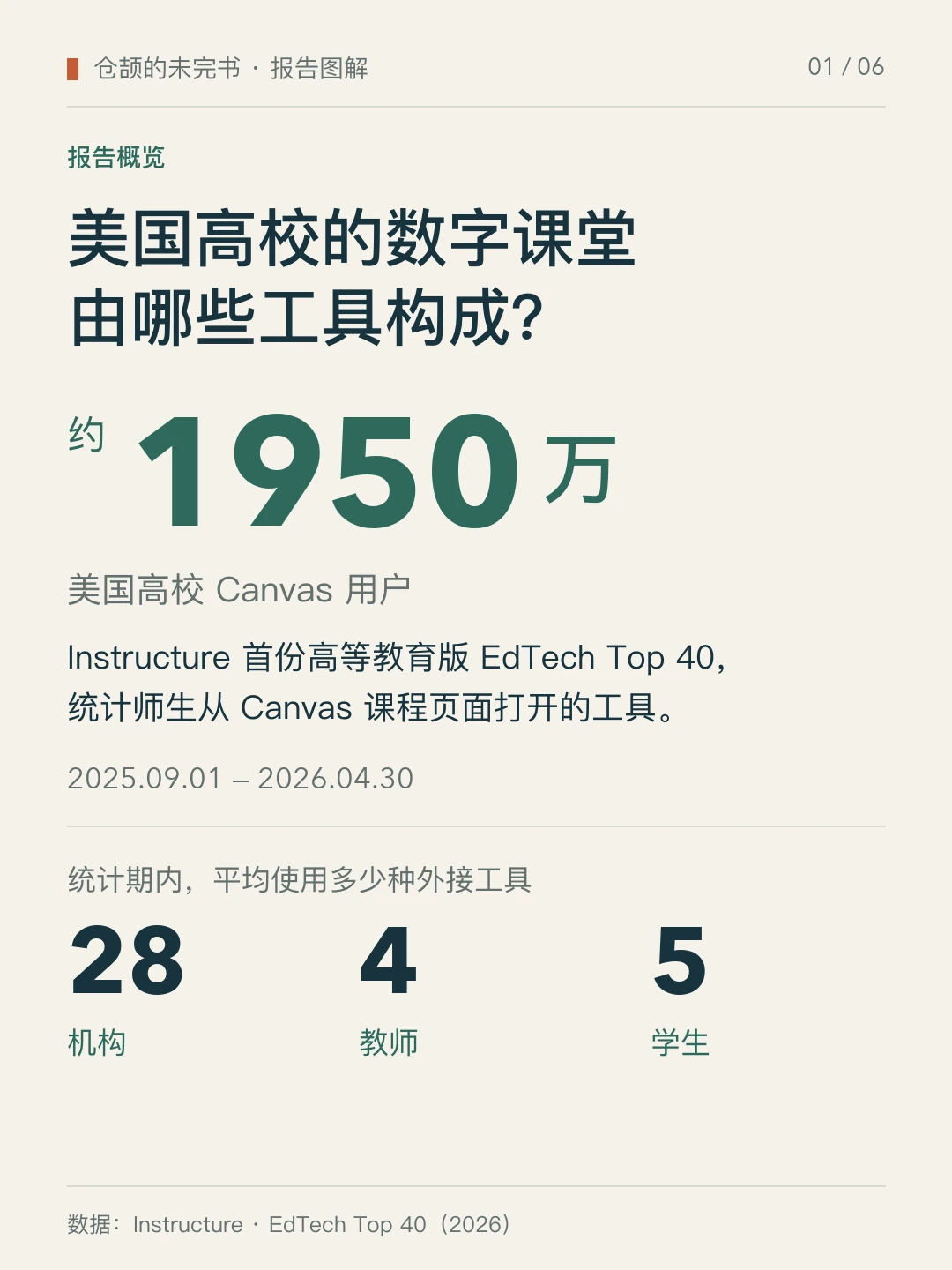
Instructure, the company behind Canvas, has published its first higher education edition of EdTech Top 40. Its main findings can be summarized in six points.
1. What nearly 19.5 million users reveal about tools used in college courses
The report tracks external tools that students and faculty at U.S. higher education institutions opened from Canvas course pages. During the observation period, each institution used an average of 28 tools; faculty used an average of four, and students five.
2. Content, collaboration, and video account for more than half the list
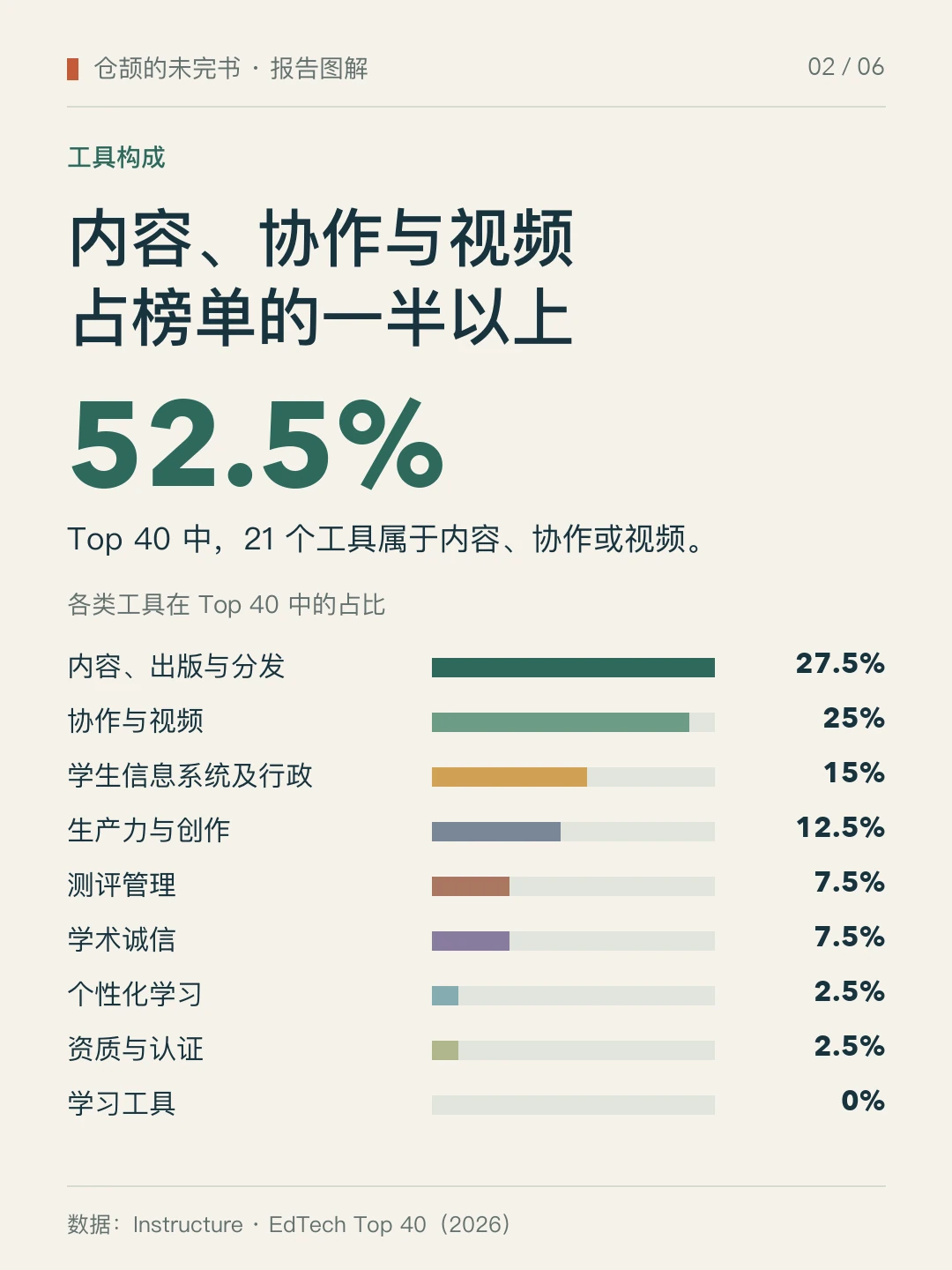
Of the 40 tools, 11 fall under content, publishing, and distribution, and 10 under collaboration and video. Together they account for 52.5% of the list. Course content, communication, collaboration, and video make up its largest share.
3. Textbook platforms, course evaluation, and video tools lead by user reach
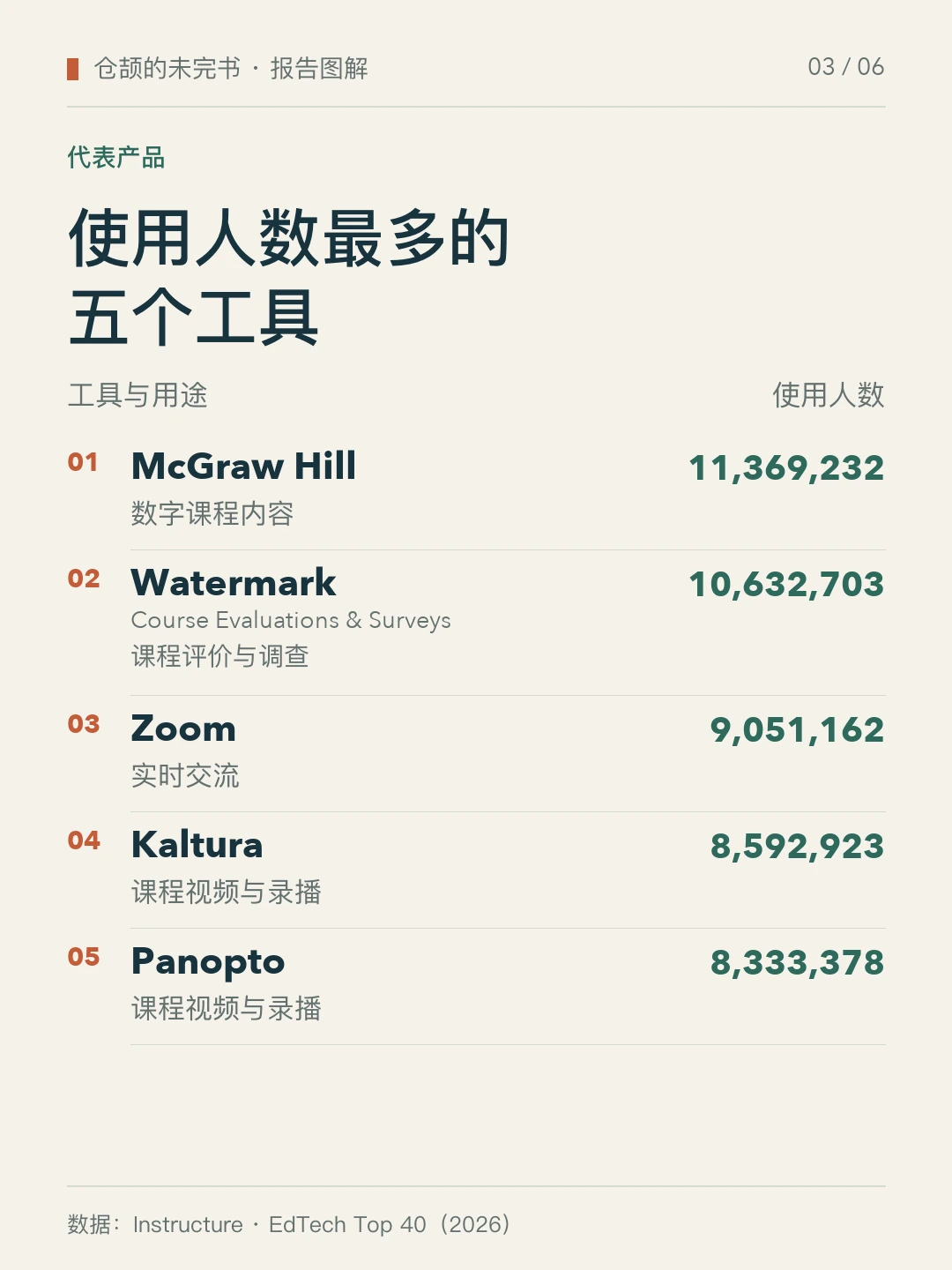
The top five by user count are McGraw Hill, Watermark Course Evaluations & Surveys, Zoom, Kaltura, and Panopto. They provide digital course content, course evaluations and surveys, live communication, and course video.
4. Higher education and K–12 have different mixes of tools
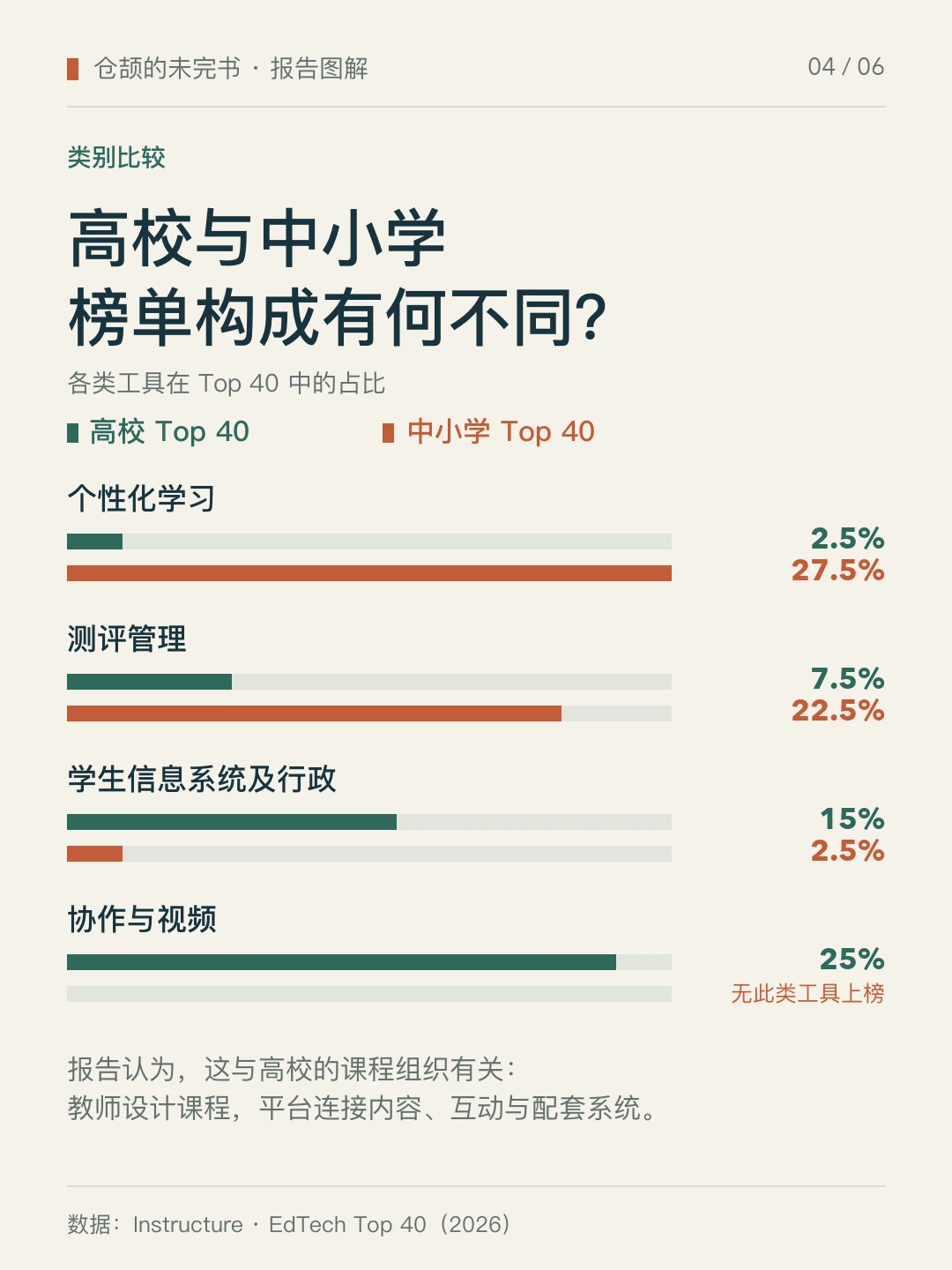
Comparing the two Top 40 lists, collaboration, video, and administrative tools occupy a larger share in higher education, while personalized learning and assessment tools occupy a larger share in K–12. The report connects this difference to how courses are organized: in higher education, faculty lead course design, and the platform connects content, interaction, and supporting systems.
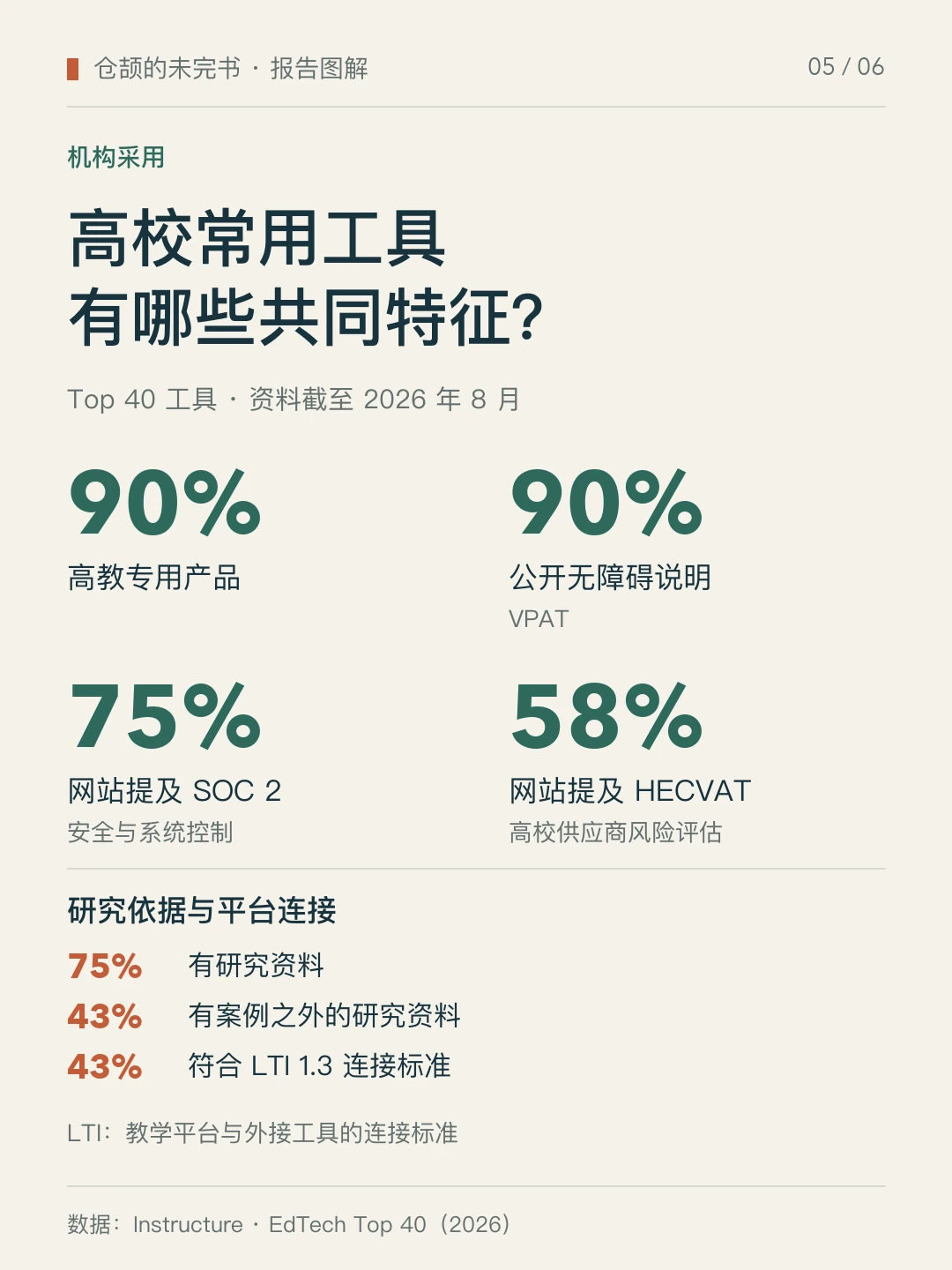
5. Most leading tools are designed specifically for higher education
On the list, 90% of tools are designed specifically for higher education, and 90% publish accessibility statements. The report also examines security documentation, research evidence, and standards for connecting to platforms: 75% of tools have research materials, and 43% have research beyond case studies.
6. Standalone AI tools have yet to reach the top 100 by user count
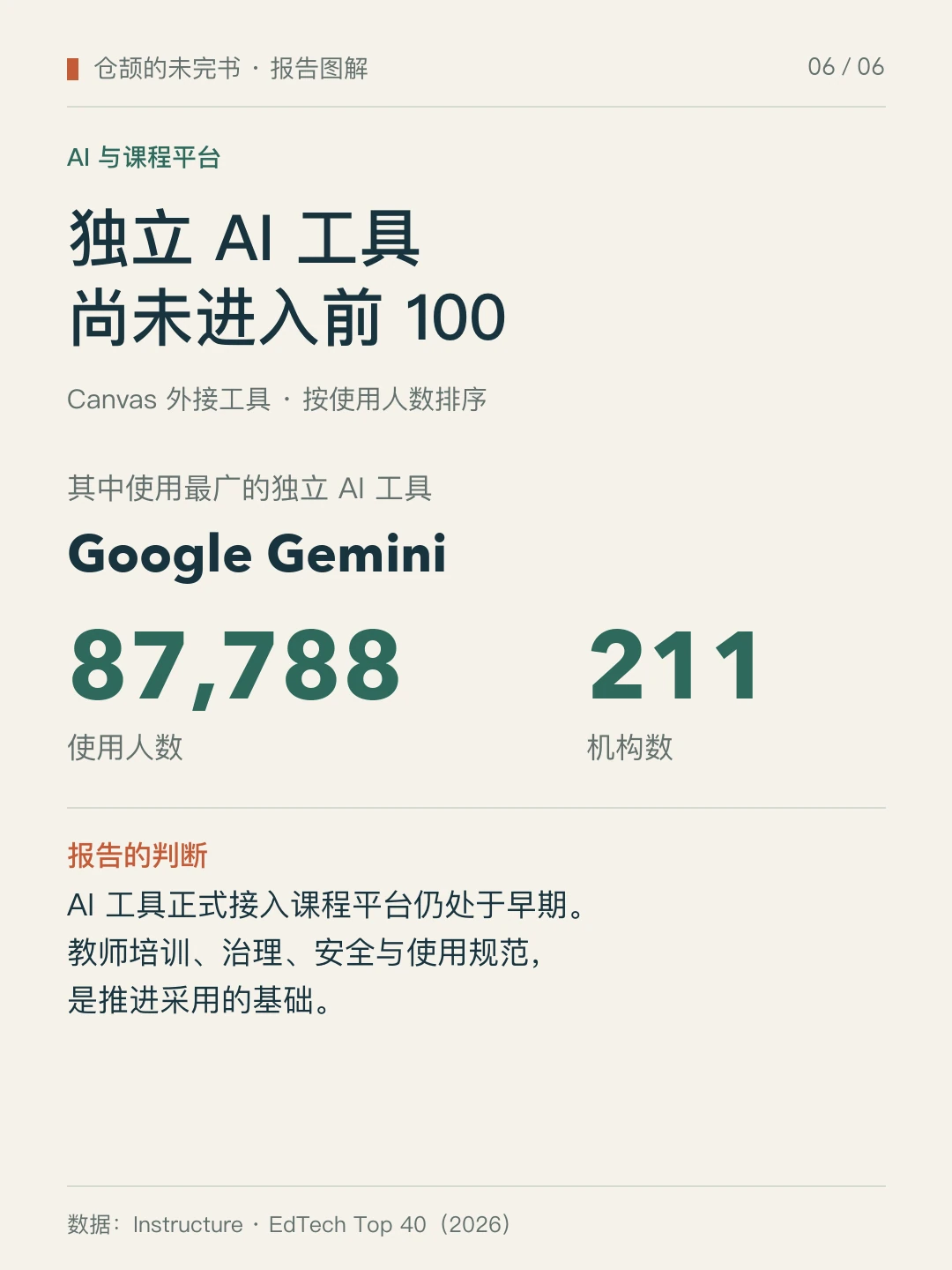
In this analysis of external Canvas tools, no standalone AI tool ranks among the top 100 by user count. Google Gemini, the most widely used among them, reached 87,788 users across 211 institutions.
The report describes formal integration of AI tools into course platforms as being at an early stage. It identifies faculty training, governance, security, and usage guidelines as foundations for adoption.
Source: Instructure, EdTech Top 40: Inside the U.S. Higher Education Digital Learning Stack, published September 29, 2026.
Scope: external tools accessed through LTI in Canvas at U.S. higher education institutions, September 2025 through April 2026.
AI contribution
The author selected the report, proposed the illustrated format and accompanying points, and decided how to present the findings, including a separate section on AI. AI extracted the report’s findings, checked the definitions behind its data, and created the text and charts. AI translated the Chinese article into English for the blog, with the author responsible for publication decisions.